Upfront Cost & Long-Term Savings: Detailed Comparison of Used, New & Reman Heavy Trucks
Introduction
Fleet procurement teams across Africa regularly evaluate three mainstream heavy truck options: brand-new OEM trucks, ordinary pre-owned used trucks, and certified reman heavy trucks. A common purchasing pitfall is basing decisions purely on upfront sticker price, treating a lower initial expense as guaranteed long-term savings. Real economic value only emerges after evaluating maintenance demand, downtime exposure, depreciation trajectories, warranty coverage, tender qualification eligibility and residual asset value across the full ownership lifecycle.
This article delivers a side-by-side, principle-driven comparison aligned with REMAN ROAD standards. It contrasts upfront capital pressure and cumulative long-term savings for new, used and certified reman heavy trucks, tailored for construction, mining and long-haul haulage fleets, without fixed pricing assumptions that vary widely by market, specification and shipping terms.
Core Evaluation Framework
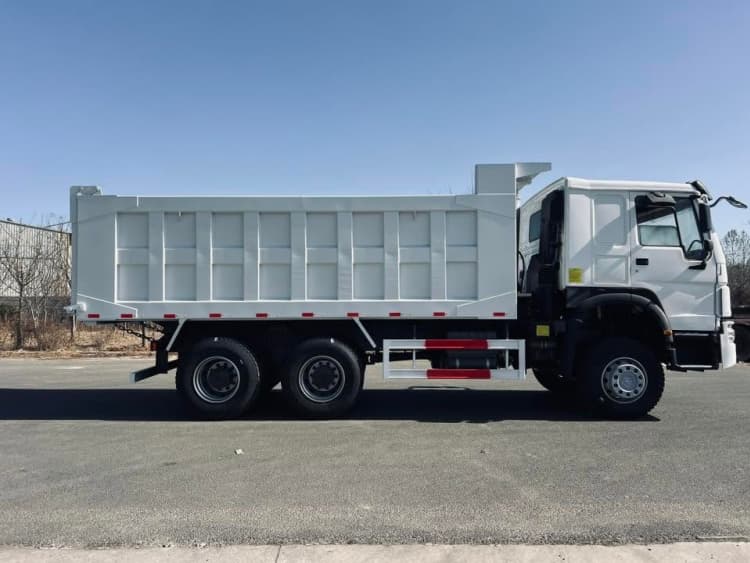
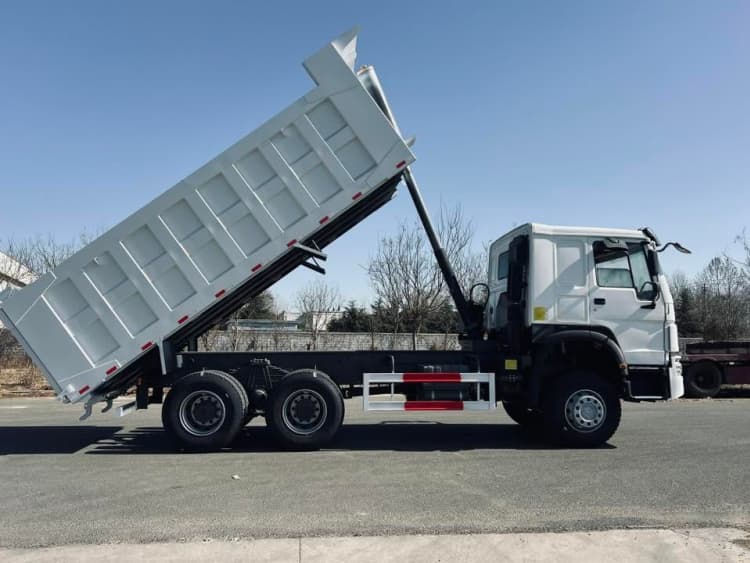
All three categories refer to 6×4 heavy-duty dump and haul trucks, assessed over a typical 5-year ownership cycle under African off-road and highway operating conditions. Fuel efficiency is treated as comparable across properly maintained units, since fuel costs are primarily driven by load, route and local fuel pricing rather than asset type.
The largest variable economic loss comes from unplanned downtime, where each idle vehicle creates lost revenue, idle labour and potential contract penalties. Rather than locked dollar figures, this comparison focuses on relative cost pressure and risk profiles that hold consistent across regional market fluctuations.
Upfront Capital Profile
Brand-new OEM trucks carry the heaviest upfront capital requirement. They require the largest one-time cash commitment or loan facility, tying up substantial working capital at the point of purchase. New units ship with full factory warranties, zero prior service history and guaranteed OEM specification compliance, but the high entry barrier limits how quickly a fleet can scale its haulage capacity within a fixed procurement budget.
Generic used trucks represent the lowest immediate cash outlay on paper. On the surface, they appear to be the fastest way to add assets. However, this low entry cost comes with no structured validation process. There is no mandatory full disassembly, fatigue inspection or systematic component renewal. The truck’s past load history, hidden structural wear and prior accident damage often remain undocumented, creating latent risks that do not appear in the initial purchase negotiation.
REMAN ROAD Certified reman heavy trucks sit between the two extremes in upfront investment. They cost more than ordinary used trucks but demand a far smaller capital commitment than equivalent new trucks. Every reman heavy trucks follows a fixed industrial reman workflow: complete teardown of assemblies, non-destructive fatigue testing, mandatory replacement of fatigue-critical consumable parts, dynamometer performance validation and loaded road testing, paired with traceable documentation and formal certification. This creates controlled initial spend while eliminating the unknown defects that plague unvetted used stock.
Long-Term Operating Cost Trajectory
New trucks deliver the most predictable low operating overhead in routine use. Their wear rate is gradual, scheduled maintenance intervals are spaced further apart, and unexpected major failures are rare within the OEM warranty window. Unscheduled downtime events are infrequent, which is critical for operations where even short stoppages trigger heavy contractual penalties. Over time, however, the large initial capital investment continues to weigh on overall fleet economics, even with stable running costs.
REMAN ROAD Certified reman heavy trucks carry moderately higher scheduled maintenance requirements than new trucks. Wear components are systematically renewed during the reman process, but the asset is still built on an existing core, so routine service frequency sits above factory-new vehicles. The key distinction is predictability. Failure risks are screened out during the industrial reman workflow, so fleet planners can build maintenance into project timelines and budget for service without facing sudden, catastrophic component breakdowns. For most fleets, this controlled maintenance burden is offset by the reduced capital lock-up from day one.
Ordinary used trucks show a very different cost curve. While maintenance spend may stay low for the first several months of operation, deferred wear and hidden fatigue defects surface unpredictably as time passes. Repair frequency rises sharply, and breakdowns tend to involve high-value assemblies such as frames, crankshafts and gearboxes. These failures create extended downtime, which often becomes the single largest hidden expense for fleets running uncertified used trucks. The low upfront price advantage is steadily eroded, and in many cases fully erased, by emergency repairs and lost operational revenue.
Depreciation & Residual Value Over 5 Years
New trucks experience steep depreciation in the early years of ownership. Their value drops fastest immediately after deployment, even when maintained perfectly. Later in the holding cycle, depreciation slows, and residual value remains solid, supported by OEM service records and factory origin.
REMAN ROAD Certified reman heavy trucks follow a much more stable depreciation curve. Because each certified reman heavy trucks has a complete traceability dossier and formal reman certification, buyers in the secondary market can verify the work that has been completed. This prevents the sharp value collapse common to undocumented used equipment. When the fleet is ready to dispose of or reallocate assets after a project, certified reman heavy trucks retain meaningful residual value and are easier to sell to formal contractors and tender-qualified fleets.
Generic used trucks suffer the weakest residual value outlook. Without proof of inspection, component renewal or performance validation, buyers discount these assets heavily. Once major wear issues emerge, their market value can drop rapidly, often settling near scrap value, with very limited appeal for formal construction and mining tender projects.
Non-Financial Value Factors That Shape Long-Term Outcomes
New trucks carry clear advantages for tender compliance where specifications explicitly require brand-new OEM equipment. They come with factory calibration, up-to-date emission configurations and access to official OEM dealer service networks. Their primary limitation is financial flexibility: they are less suitable for fast, flexible fleet scaling when working capital is constrained.
Certified reman heavy trucks unlock an additional layer of value unavailable to generic used fleets. Validated reman documentation and lifecycle carbon statements support ESG reporting and green tender evaluation criteria. For donor-funded infrastructure and government construction contracts, this can create bidding advantages and expand the range of projects a fleet can qualify for. They also align well with mixed-fleet strategies: a small core of new trucks can cover ultra-critical continuous operations, while certified reman heavy trucks add flexible peak capacity for short-term project cycles.
Generic used trucks carry no such compliance benefits. Their lack of standardised inspection records means they cannot satisfy audit requirements for formal green procurement, and they are frequently excluded from structured tender evaluation. They are only suited for informal, low-stakes haulage work where extended downtime and project delay penalties do not apply.
Matching Asset Selection to Your Fleet Strategy
New trucks are the right fit for fleets that operate under strict penalty clauses for downtime, hold consistent strong cash flow, plan to retain assets over a longer lifecycle, and have reliable local access to OEM service support. The priority here is operational stability above fast capital turnover.
Certified reman heavy trucks represent the balanced option for most African construction and mining fleets. They support rapid fleet expansion, fit milestone-based contract workflows, satisfy ESG tender requirements, and keep catastrophic failure risks under control, provided the operator maintains a capable in-house workshop to manage planned service schedules. This option balances cash flow, hauling capacity and total ownership risk.
Generic used trucks are only appropriate for casual, low-risk haulage with no heavy financial consequences for stoppages. Fleet owners selecting used stock must accept full exposure to unplanned high-cost failures and understand that the initial low purchase price does not equate to long-term savings.
Common Industry Misconception
The most pervasive misunderstanding is grouping certified reman heavy trucks together with used trucks. A generic used truck is sold as-is, with no systematic lifecycle reset.
REMAN ROAD certified reman heavy trucks goes through an industrial reman workflow designed to reset its service life, with every critical inspection and component change recorded for audit. This certification boundary separates predictable long-term budgeting from uncontrolled operational risk.
Closing
This comparison makes clear that upfront price is an unreliable guide for procurement decisions. Generic used trucks have the lowest entry cost but carry the risk of becoming the most expensive option across the ownership cycle due to unpredictable breakdowns and downtime. New trucks minimise operational risk but demand heavy capital commitment and lock up working capital.
Certified reman heavy trucks occupy the practical middle ground for the majority of African fleets. They greatly reduce initial capital pressure while screening out structural and powertrain hazards, preserving reasonable residual value and opening eligibility for ESG-focused tender opportunities. For fleet managers aiming to balance cash flow, hauling capacity and total cost of ownership, standardised, certified remanufacturing often delivers the strongest long-term economic outcome.